
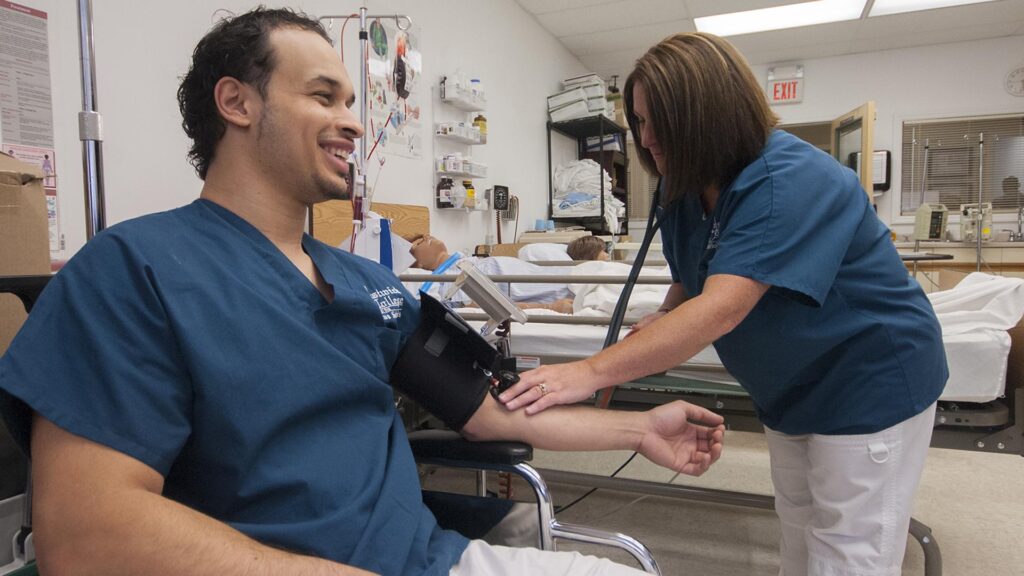
Patient Care Technicians (PCTs) are becoming more and more vital in today’s healthcare sector because they assist medical teams and provide patient care. These personnel are often the unseen heroes who help patients with routine needs,monitor their vital signs, and exhibit compassion. If you’re considering a hands-on job in healthcare, becoming a patient care technician is a good choice because it combines practical skills, interpersonal ties, and opportunity to advance in the field.
What Does a Patient Care Technician Do?
The main job of a patient care technician is to communicate with patients, doctors and nurses. PCTs help with patient care by performing a variety of tasks under the direct supervision of doctors and registered nurses. They might check vital signs like blood pressure, pulse, and temperature; aid patients with everyday tasks like dressing, bathing, and moving around; take blood or urine samples for lab tests; and perform e medical tests like electrocardiograms (EKGs).
The variety of tasks requires both technical skill and the ability to get along with and work well with patients. In addition to their clinical tasks, PCTs often comfort, reassure, and answer patients’ questions while they are in the hospital or getting treatment. In this position, being able to communicate and understand others is just as crucial as being good at technology.
How to Be a Patient Care Technician
To enter the workforce as a patient care technician, you will need a combination of education, hands-on training, and certification.
The Foundation for Education
Most employers require a GED or a high school diploma. This basic education helps people learn the basics of healthcare and clinical skills.
Specialized Training Programs
Many people who want to become PCTs sign up for accredited patient care technician training programs. These programs teach anatomy, physiology, infection control, and patient care skills through a combination of classroom and clinical work. The practical component is necessary for gaining skills and confidence in real-life circumstances.
Accreditation
Certification can reflect professional standards and assist in finding employment , although the requirements for different states and employers vary..The most widely accepted certificates, including the Certified Patient Care Technician/Assistant (CPCT/A), require passing an exam. The certification procedure gives employers peace of mind that candidates have met certain standards.
This structured training makes PCTs ready to work in a wide range of healthcare settings, including hospitals, assisted living facilities, outpatient clinics, and rehabilitation centers.
Why there is more demand for patient care technicians
There are a number of reasons why the need for patient care technologists is growing:
- Aging of the Population: As people get older, they need more healthcare services. They often require more frequent and specialized care. The need for skilled PCTs who can assist nurses and doctors is expanding.
- Healthcare Staffing Needs: Because there are always staff shortages, hospitals and assisted living institutions are relying more on PCTs and other trained support workers to provide patients with the best care possible.
- Wide Range of Care: PCTs are useful in busy healthcare settings because they can handle many different aspects of patient care.
The U.S. Bureau of Labor Statistics predicts that the demand for Patient Care Technicians and other healthcare workers will rise faster than the average for all jobs over he next ten years. This means that there are many employment opportunities for those who want to work in this industry.
Opportunities for Career Advancement
Starting out as a patient care technician opens up many opportunities to advance in your profession. Many PCTs choose to build on their expertise by getting more training or certifications that qualify them for higher-level positions. For example:
- Licensed Practical Nurse (LPN): PCTs can become LPNs by getting further schooling and a license. This will allow them to provide nursing care and give medications.
- Registered Nurse (RN): With a nursing degree, PCTs can become leaders in health education, treatment planning, and patient care administration.
- PCTs can make themselves more valuable and employable by learning additional skills including e phlebotomy, dialysis, or EKG technology.
The expertise gained as a PCT often serves as a robust foundation for these transitions, integrating practical knowledge with essential patient interaction skills required at all levels of healthcare practice.
The Benefits That Go Above and Beyond
What sets the job of a patient care technician apart from many others is that they may make a difference in the lives of patients. While technical skills are crucial, many PCTs find the most satisfaction in the human side of their work, which is to provide comfort, dignity, and companionship.
These ordinary things—making a patient feel heard when they are going through a hard time, helping someone get their independence back, or just being there for someone who is scared—show why the work is more than just a job. For many people, it becomes a calling.
Eastwick College: Moving Forward with Training and Education
The Patient Care Technician Program at Eastwick College trains students to enter the healthcare field. This curriculum teaches students important skills and gives them a well-rounded view of patient care by integrating classroom learning with hands-on practice. Graduates are ready to face the challenges of the field and make a big difference in the lives of their patients.
Becoming a patient care technician can be a rewarding way to get into the healthcare field because it combines learning practical skills with patient care.. If you want a job that is both challenging and rewarding, being a patient care technician might be the right choice for you.
For additional information on how to get started, check out Eastwick College’s Patient Care Technician Program or Call 201-379-1884 today.