
Water in, waste out, gas safe. That promise lives behind every quiet fixture and clean floor. A Plumber Apprenticeship turns that promise into habits you can repeat on real jobs. You learn code you can use, joints that hold, and the quick checks that keep inspectors calm. Classroom ideas become field moves. Rough, set, test, and close without rework.
Plumber Apprenticeship: What You Learn First
Start with safety and scope. Lockout and tagout completed every time. PPE to match the task. Ladder feet checked, torch with a fire watch, extinguisher in reach. Then open the code book. Clearances, vent tables, trap rules, support spacing. Read a line, touch the fitting, make the choice. A Plumber Apprenticeship keeps code next to pipe so rules never float.
From Bench Practice to Real Walls
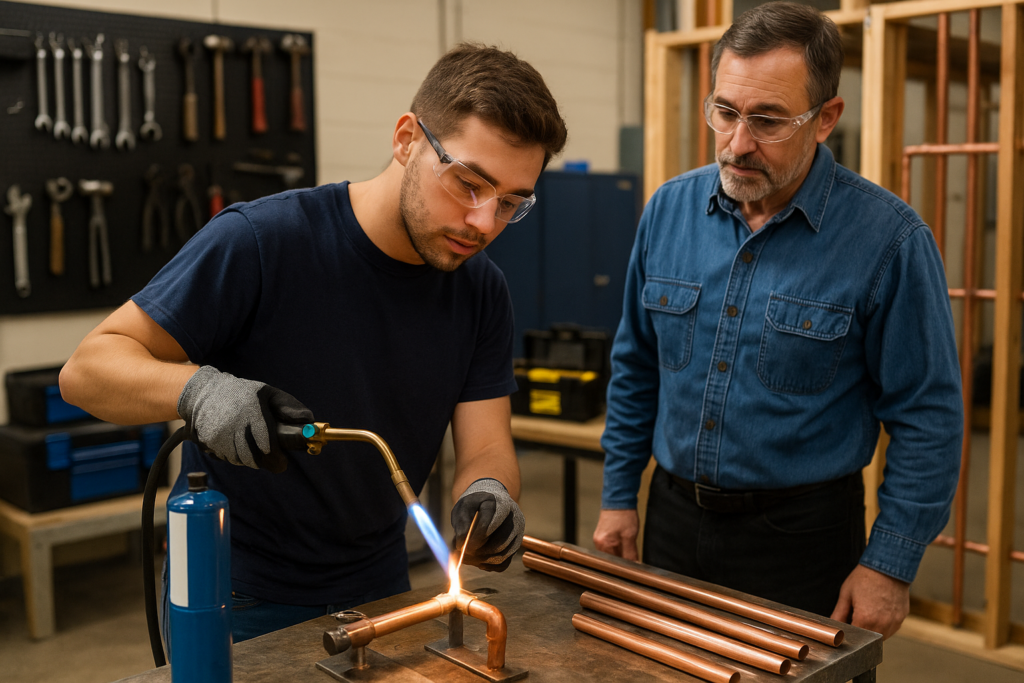
Good joints begin before heat or glue. Copper gets cleaned bright, fluxed light, heated steady until capillary pull finishes the seam. PVC and CPVC get square cuts, beveled edges, primer that flashes, cement that seats in a quarter turn. PEX gets crimped or expanded to spec and checked with a gauge. Threaded steel needs straight threads, the right dope or tape, and torque without splitting a fitting. You test. You log it. You move on knowing the joint will not call you back.
Reading Prints and Turning Them Into Rooms
Prints tell you where; layout decides if the room works. Read legend, scale, and elevation. Mark stud bays with pencil and level. Center supplies, match heights across a bank of sinks, and align stub outs for clean trim. Coordinate with electricians and HVAC before anyone drills. Take a photo of every wall before it closes. When finish day comes, your rough sets you up for a calm trim.
Tools Used the Way Pros Use Them
Tape, level, torpedo. Tubing cutter with a fresh wheel. Reamer and deburr so flow stays clean. Torch with proper tip, fire cloth set, bucket of water nearby. Wrenches that fit and do not round. Threader oiled. Expansion or crimp tools verified with a gauge. Stage fittings by size. Keep a catch bin for offcuts. Speed comes from order, not hurry.
How Crews Actually Communicate
Short phrases keep jobs safe. “Torch hot.” “Water on.” “Clear below.” Confirm “power off, tagged, locked” before you cut heat tape. Ask for a second set of eyes on a lift. Pre-task huddle names hazards, owners, and the day’s milestones. Two minute wrap after. What slowed us?. What fixed it? One change for tomorrow. Crews that talk like this leave cleaner work.
Where a Plumber Apprenticeship Leads
You start as a helper or apprentice installer. You earn responsibility. A bathroom rough, then a floor, then small jobs alone. Some move into service vans. Others grow on commercial crews. Licensure opens doors to lead tech, foreman, estimator, or shop owner. The ladder is clear. Hours, exams, more autonomy, steadier pay.
Closing Section
Good plumbing looks invisible. Drains breathe, lines hold, fixtures feel right. A Plumber Apprenticeship turns that outcome into steps you can repeat under pressure. If you want the full sequence of classes, labs, and field expectations, review the Plumber Apprenticeship program at Eastwick College. It shows how training becomes clean installs and fewer callbacks.