
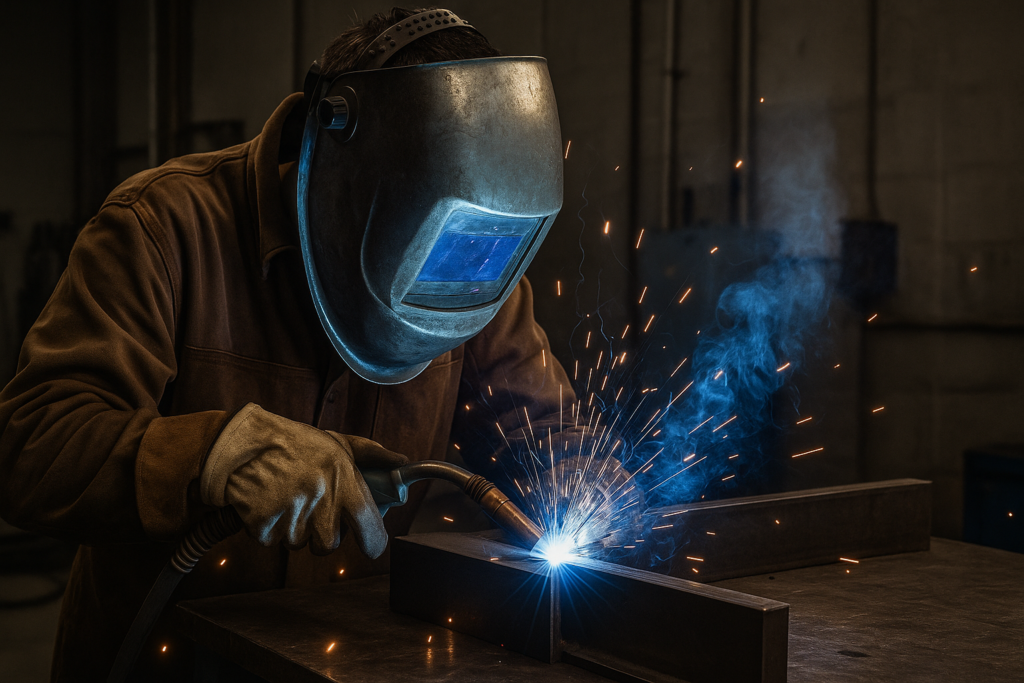
Strong steel joints are built with precision. Clean prep, steady hands, settings that match the metal, and inspections that confirm accuracy. Welding training walks you through that chain from the first spark to a finished piece that holds under load. You learn shop safety, machine setup, metal behavior, and positions until the motions feel natural. By the time you hit a job site, you have the ability to set up, weld, and check your work without slowing anyone down.
Welding: What You Learn First
Day one is simple and direct: PPE that fits, helmet shade matched to process and amperage, gloves you can move in, jackets zipped. Then cylinders, valves, and leads are handled the right way and fire watch rules that you follow at all times.. After safety comes metal prep—grind off mill scale, square edges, clean to bright. Clamp, tack, and check for squares before you ever strike. First beads go on a flat plate, short arc, even travel, consistent contact tip to work distance. Welding starts with control. Speed arrives later.
Processes You’ll Master
Jobs and metals vary, so you rotate through core processes in Welding labs:
- SMAW (stick): field friendly, strong on structural steel and repair.
- GMAW (MIG): fast deposition, clean on thin stock and fabrication.
- GTAW (TIG): precise heat control for stainless, aluminum, and thin sections.
- FCAW (flux core): high output for heavy sections and outdoor conditions.
Each process has its own rhythm. You learn which to choose, how to set it, and when to switch.
Reading Blueprints and Symbols
Welders follow detailed plans. You learn to read title blocks, line types, and weld symbols that call out size, length, and contour. Arrow side, other side, field weld, all-around, finish marks. You’ll lay out cut lists, mark joints, and check tolerances before striking an arc. In shops where time is money, this accuracy keeps projects moving.
Settings That Match the Work
Machines do what you tell them. You practice dialing voltage, amperage, wire speed, and gas flow to fit joint type and material. Short circuit on thin sheet, spray when the job demands speed and the position allows. With TIG, you match the tungsten size, cup, and gas lens to the part, then control heat with a pedal instead of your shoulders. Keep a notebook and write the settings that worked. Next time, you start closer to the right.
Distortion Control You Can Repeat
Heat moves metal. Training shows you how to fight that drift. Stagger tacks. Alternate sides on multi-pass welds. Clamp with intention. Use chill bars when you can. Let assemblies cool before the last pass. Straight lines and true corners are not luck. They’re the result of simple, repeatable steps.
Inspection That Protects Your Name
You learn to inspect with accuracy: visual checks for undercut, porosity, overlap, and incomplete fusion. Fillet gauges for leg size. Straightedges and squares for alignment. When required, bend and break tests, dye penetrant on non-ferrous, or magnetic particles on ferrous parts. Records matter. Date, process, filler, settings, result. If a weld fails, you find out why and fix the cause, not just the appearance.
Where Welding Can Take You
Paths branch fast. Structural steel in construction, pipe in energy and utilities, fabrication in manufacturing, repair in heavy equipment and marine yards. Certifications open doors: plate, pipe, positions, material groups. With experience, some welders move into inspection or supervision. Others start small shops. The work travels. Skills hold value across regions and industries.
Bringing It All Together
A solid weld looks simple until you watch the steps that made it. Clean prep, correct setting, and hands that don’t rush. Welding training builds that sequence so finished joints pass inspection and jobs move on time. If you want the layout of labs, processes, and certifications in one place, look at the Welding Diploma Program at Eastwick College. It shows how shop practice turns into field-ready work.